

CG Policy · 2025
In this section7 topics
Corporate Governance Policy
Has a Corporate Governance Policy
Yes
Policy Description
Good Corporate Governance Policy in accordance with the Good Corporate Governance Policy for Listed Companies 2012 of the Stock Exchange of Thailand.
The Company is fully aware, and gives all its attention to the “Good Corporate Governance”. The Company believes that the good corporate governance reflects the efficient and transparent management system, which will help promoting the confidence of the Shareholders, investors and all parties involved and will ultimately lead to a sustainable growth of the Company and an increase in value. The Company has continuously encouraged the implementation of good corporate governance by advising the directors and the management to develop good corporate governance and the practices in accordance with the international standards. This is done by following the good corporate governance, as directed by the Stock Exchange of Thailand, and adapts it to the Company’s corporate governance. Measures are taken to further improve the said policies in accordance with the guidelines of the Stock Exchange of Thailand, which me change in the future to be better suited for the evolving environment of the Company. The practices cover 5 categories as follows;
1. Shareholders’ Rights
The Company is fully aware and gives its utmost attention to the rights of the Shareholders. This is shown by not taking any actions which may violate or reduce the rights of the Shareholders, including encouraging the Shareholders to use their rights. The basic rights of the Shareholders are, trading or transferring shares, sharing profits with the Company, receiving sufficient information about the Company, attending the meetings to use their rights to vote for appointing or removing the directors, appoints the auditors and any issues which have a direct impact to the Company for example, dividend allocation, setting or amending the regulations and the Memorandum of association, decreasing or increasing the capital and authorizing special transactions.
The Company has the policy to promote conveniency for the shareholders, including the institutional investors by holding the meeting in the place with sufficient access from the public transport so that the shareholders can easily attend the meetings. The Company always provides information, dates, time, place and agendas including all relevant information for making decisions to the Shareholders prior to the meeting and also notifies the shareholders about all the requirements, as well as the voting procedures. The Company encourages the Shareholders to exercise their rights to fully attend the meeting and to vote, and also to express their opinions and raise any questions relating to the Company in the meeting. The Shareholders may also submit the inquiries or agendas prior to the meeting. The Shareholders may also appoint a proxy to attend the meeting in the case of their absence.
2. Equal Practice to Shareholders
The Company treats all shares holders fairly and equally, no matter the Shareholders who are Executives, non – Executive, foreign Shareholders and minor shareholders which reinforce the confidence in the shareholders that the board and the management has taken great care in the spending of the shareholders funds which is the main factor in creating the confidence for investing with the Company. The Board of Directors holds the responsibility to make sure that all shareholders are treated fairly and that all their basic rights have been met equally.
The Board of Directors have arranged for the Shareholders Meeting in a way that encourages equal practice to all shareholders and give the chance even for minor shareholders to propose any individuals to take the position as directors, prior to the meeting and in an appropriate time frame. The Company also allows the shareholders who cannot attend the meeting themselves to let their proxies attend the meeting, and also have the rights to vote in their stead.
The Board of Directors has stated the methods to protect and prevent the use of the internal information in writings and will announce this as guidelines for all members of the organization.
3. Stakeholders’ Roles
The Company is fully aware of its responsibility and practices to different groups of stakeholders and will seek the mutual benefits so that all groups of stakeholders can be confident that their rights will be fully protected and well exercised. This has been set as a guideline to follow in order to clearly meet the demands of all groups of the stakeholders as stated in the “Code of Conducts and Business Ethics” and will promote the Board of Directors, the management team including the workers to regard this as the fundamental principles for working in the Company and to take it as the important responsibility for all members.
4. Information Disclosure and Transparency
The Company prioritizes the disclosing of all important information relating to the Company, both financial and non-financial information through an accurate, complete, on-time and transparent channel which is easy to access, fair and respectable.
The Company believes that the quality of the financial related reports is something that the shareholders and the outside information give the utmost importance to, the Board of Directors will make sure that all theinformation displayed in the financial reports are accurate and follow the general standard accounting practices and have been evaluated by an independent auditor. The Company has appointed the Audit Committee, which consists of independent directors who takes responsibility for the quality of the financial report and the internal control. The Board of Directors’ reports, Audit Committee’s report and the auditor’s reports
Other than disclosing the information through the Company’s website at www.sankothai.net, both in Thai and English, for the past year, the Executives of the Company had met with analysts, investors and shareholders as appropriate, opp day, for example at the MAI forumhosted by the MAI Stock Exchange and through other appointments for interviewing by the medias and other investors and analysts. In many occasions, the information had been featured in printed
5. Responsibilities of the Board of Directors
The Board of Directors has the vital role of overseeing the operation to ensure the benefits of the Company. The Board of Directors takes action in place of the shareholders and is independent from the management.
The Board of Directors must have leadership, visions and can make an independent decision for the benefits of the Company and for the shareholders. In order to do so, the system is in place to clearly separate the responsibilities between the Board of Directors and the management, and to ensure that all of the Company’s activities proceed in a lawful and ethical way
The Board of Directors consists of personnel with various qualifications, not only skills and experiences but also specialized talents that are useful to the Company, including their devotion and dedication to strengthen the Company and the Board of Directors. The procedure to elect the Board of Directors, so that they can be appointed by the shareholders, have been done transparently with no influences of the shareholders or from the management team and is assuring to the outside individuals.
To ensure that the Board of Directors can work efficiently and the effectively, the Board of Directors had asked for the Audit Committee to help supporting the directors in the area of financial reports, internal control system’s efficiency and executing the rules, regulations and all codes of ethics to promote good corporate governance.
Each director has a good understanding of their responsibilities as Board of Directors and to operate the Company, always ready to share their opinions independently and constantly improve themselves to adapt to the modern times. The Board of the Directors holds this position with honesty, carefully and thoughtfully by considering the benefits of the Company and being fair to all shareholders, giving all information fully and completely.
Good Corporate Governance policies and guidelines according to the CG Code by the Securities
and Exchange Commission, Thailand.
Principle 1: Establish clear leadership role and responsibilities of the Board
The Board of Directors understands and is aware of the responsibilities as the leader that oversee the Organization with good governance. This includes establishing goals and objectives, establishing strategies, work policies as well as allocating vital resources in order to achieve the said targeted goals. The Board of Directors must follow up, evaluate and report the performance for creating sustainable value to the business. The governance outcome should consist of; competitiveness and performance with long-term perspective, good corporate citizenship, and corporate resilience. The Board of Directors is responsible for enforcing the employees to uphold the duty of care and the duty of loyalty, and operate under the rule of laws and the shareholders’ resolution. The Board understands the roles and responsibilities and give clear missions and responsibilities to the CEO, including following up on any given tasks as necessary.
Principle 2: Define objectives that promote sustainable value creation
The Board of Directors defines core objectives of the business that promote sustainable value creation. The objectives must match the value creation for the business, customers, stakeholders and the society as a whole. The Board must ensure that the objectives and goals, including medium term and/or annual strategy also matches the objectives of the business by safely introducing adequate innovation and technology.
The Board of Directors clearly considers all appropriate directions and strategies for operating the business, including human resource development to make sure that the said strategies allow the business to function effectively and efficiently under various circumstances. The Company has the visions and organizational cultures that reflect the good corporate governance.
Principle 3: Strengthen Board Effectiveness
The Board of Directors have established and sufficiently revised the structure of the Board to lead the Organization to the targeted goals and objectives. This is done by selecting the most appropriate individual to be the Chairman and carry on the selection process of the Directors clearly and transparently. The remuneration of the Board will be approved by the shareholders fairly and appropriately. The Board of Directors will all carry out their duty responsibly and allocate their time suitably for the job.
The Board of Directors annually evaluates the performance of the Board, sub committees and individual Directors, where the evaluation result will be used further to improve the performance. The Board of Directors must all understand the roles, nature of the business and the laws relating to the business, including providing the support so that all Directors can improve their skills and carry out their duty splendidly. The Board of Directors must ensure that the operation runs smoothly, can access necessary information, and has the Company’s Secretary with adequate experience to support the Board’s performance.
Principle 4: Ensure effective CEO and people management
The Board of Directors selects and ensures that the CEO and high level Executives have adequate skills and experience necessary to drive the Organization to its goals. The Board makes sure that there are suitable remuneration and performance evaluation for the members of the Organization, to improve their skills, abilities, experiences and provides adequate motivations. The Board of Directors understand the structure and the relationship of the shareholders that may affect the management and the business operation.
Principle 5: Nurture innovation and responsible business
The Board of Directors emphasizes on supporting and promoting innovation that creates value to the Organization together with providing benefits to the customers or stakeholders, as well as being responsible to the environment.
The Board of Directors follow up and makes sure that the business operates with responsibility to the society and to the environment as reflected in the operational plan. This is so that all parties proceed by abiding to the core objectives, goals and the strategies of the Company.
The Board of Directors oversee the allocation of resources efficiently and effectively by considering the impact of the value chain, so that the goals and objectives can be achieved sustainably.
The Board of Directors manages the organizational information technology that matches the requirements of the Company, including overseeing the use of IT to create business opportunities and to improve the risks management. In order to achieve the objectives and core missions of the Company, the Board of Directors also covers risks management in terms of information technology, as well as establishing policies to safely protect the information.
Principle 6: Strengthen effective risk management and internal control
The Board of Directors makes sure that there are risk management system and internal control that allows the Company to achieve its objectives effectively, under the laws, regulations and standards related. The Board improves and develops the risks management process constantly by arranging independent auditors to be responsible for inspecting and evaluating the risks management and internal control systems, as well as reporting and disclosing their findings in the annual report.
The Board has set up the Audit Committee that can work effectively and independently with the qualifications and responsibilities as indicated by the Securities and Exchange Commission and the Stock Exchange of Thailand.
The Board of Directors have monitored and managed the conflicts of interests that may happen between the Company and the management, the Directors or the shareholders, including preventing the unlawful use of assets, information, opportunities and undesirable business transactions with any parties relating to the Company.
The Board has clear anti-corruption policies, including supporting activities that promotes awareness of the employees to abide by the law and all relating regulations in each level of the Organization, and to the external parties. The Company establishes channel to listen to claims and whistle blowers through the website with complete procedures to verify the information (record, follow up, solve the problem) and to report to the Board of Directors. The Company provides protection measures to whistle blowers that honestly reports the leads.
Principle 7: Ensure disclosure and financial integrity
The Board of Directors is responsible for selecting the person in charge of preparing financial reports and disclosing all significant information sufficiently, correctly and on time, and overseeing the financial liquidity and affordability ratio. The individual must possess necessary sills and experience suitable for this responsibility. This individual may be the Chief of Accounting and Finance, Accountant, Auditor, Company’s Secretary, and Investor Relation. In the case of a financial crisis, the Board prepares back up plan or any other methods of resolving financial situation. The Board is aware of the rights of stakeholders and has arranged for the representative to communicate with the shareholders. This individual must understand the Company’s business, including its objectives, goals, values and can communicate well with investors and capital market such as Directors or the CEO. The Board promotes the use of IT in disclosing information. Other than publishing through the Stocks Exchange of Thailand as required, the Board of Directors also publishes the information both in Thai and English through other channels such as the Company’s website and provides up-to-date information, accessible for all parties.
Principle 8: Ensure engagement and communication with shareholders
The Board of Directors ensures that the shareholders engage in making important decisions of the Company fairly and equally as stated in the Company’s corporate governance guidelines. The Board promotes shareholders participation in the shareholders’ meeting and allow the shareholders to exercise their rights effectively and transparently. The shareholders can add agendas prior to the meeting and if the agenda is not approved, the Board must notify the shareholders.
The minority shareholders can propose the individuals to take the position of Directors. The Board of Directors must disclose such information to the shareholder in advance and also publish the regulations on the Company’s website and make sure that the meeting invitations contain complete and accurate information as per the rights of the shareholders, both in Thai and English language. The invitation must be sent out and revealed publicly at least 28 days before the meeting. The Board of Directors and all Executives must be present so that the shareholders can inquire on any relating matters. The Company will disclose the meeting’s resolutions and the result of the votes on the next day, through the information channel of the Stock Exchange of Thailand and on the Company’s website. The copy of the shareholders meeting minutes will be sent to the Stock Exchange of Thailand within 14 days since the day of the shareholders meeting.
Policy Document Link
https://sanko.listedcompany.com/cg.html
Page Number in Report
5-11
Policy & Practices — Board of Directors
Has Policy & Guidelines for the Board
Yes
Board Guidelines
| Guideline | Detail | Document Link | Page Number in Report |
|---|---|---|---|
| Nomination of Directors | Nomination 1. The Board of Directors The selection of the individuals for the position of the Board of Directors have been nominated by the Nomination and Remuneration Committee. which will consider from the qualifications as per the Section 68 of the Public Limited Company Act B.E 2535 and as per the related announcement by the Securities and Exchange Commission. Moreover, the Board of Directors will consider experts from various fields to take up the positions which will be beneficial to the company for advising and giving opinions on many issues. The person must have a strong leadership, visions, morals and ethics with a clean, transparent work profiles and can make an independent decision. Once this is decided, the names will be presented in the Shareholders Meeting for appointment. Directors shall be elected by the General Meeting of Shareholders under the criteria and procedures as follows; a) A shareholder has one vote per one share. b) In the election, the shareholders may vote to the nominee individually or many persons at a time depending on the decision of the meeting. The share holders may utilize the vote as per a) to vote, but cannot distribute different amount of votes to many different nominees. c) The person who receives the votes of the highest number and the next persons in the order of the number of votes received shall be elected Directors in the number permitted. In case the next persons in the order of the number of votes received obtain equal numbers of votes and the number of such persons exceeds the remaining number of Directors permitted, the Director to be elected therefore shall be decided by the Chairman. At the Annual General Meeting of shareholders one-third of the Directors, or if their number is not multiple of three, then the number nearest to one-third must retire from office. A retiring director is eligible for re-election. The directors, who will retire in the first and second year after the company is listed, will cast lots to see who will retire in the following years and the director with the longest time on the post will retire from office. The retired directors may be re-elected back into position again. In case the post of a Director has been vacated owing to reasons other than by completion of his tenure, the Board of Directors shall elect a qualified person, who does not have any prohibitive attributes pursuant to Section 68 of the Public Limited Company Act B.E. 2535 as a replacement Director for subsequent meetings of the Board of Directors unless the remaining period of the tenure is less than two months. The person who becomes a replacement Director may remain so as long as his/her time as Directors allowed, and must have the approval of no less than 3 out of 4 of the remaining directors. In addition, the Board of Directors must consist of at least 1 in 3 Independent Directors from all of the Company’s directors but no less than 3 persons. The Definition of Independent Directors “Independent Director” Independent Director is the person who has no relation at all to the management of the company and/or the operation of the Company’s business. This person is independent from major shareholders and from Company’s executives, including the close relatives of the said people and can express their opinions freely by considering the benefits of the Company and of the Shareholders first. Qualifications of Independent Directors 1. Must be a person with qualifications that does not violate the rules, regulations and any other applicable laws. 2. Holding shares not exceeding 1% of the total number of shares with voting rights of the Company, its parent company, subsidiary company, associate company, or juristic persons which may have conflicts of interests by counting also the shares of relating persons. 3. Neither being nor used to be an executive director, employee, staff, advisor who receives salary, or controlling person of the Company, its parent company, subsidiary company, associate company, same-level subsidiary company, major shareholder or controlling person, unless the foregoing status has ended not less than 2 years before the appointment date. 4. Not being a person related by blood or legal registration as father, mother, spouse, sibling, and child, including spouse of child, executive, major shareholder, controlling person, or person to be nominated as executive or controlling person of the Company or its subsidiary company. 5. Neither having nor used to have a business relationship with the Company, its parent company, subsidiary company, associate company, major shareholder or controlling person, in the manner which may interfere with his independent judgment, and neither being nor used to be a significant shareholder or controlling person of any person having a business relationship with the Company, its parent company, subsidiary company, associate company, major shareholder or controlling person, unless the foregoing relationship has ended not less than 2 years before the appointment date. 6. Neither being nor used to be an auditor of the Company, its parent company, subsidiary company, associate company, major shareholder or controlling person, and not being a significant shareholder, controlling person, or partner of an audit firm which employs auditors of the Company. , its parent company, subsidiary company, associate company, major shareholder or controlling person, unless the foregoing relationship has ended not less than 2 years before the appointment date. 7. Neither being nor used to be a provider of any professional services including those as legal advisor or financial advisor who receives service fees exceeding 2 million baht per year from the Company, its parent company, subsidiary company, associate company, or juristic persons which may have conflict of interests, and not being a significant shareholder, controlling person or partner of the provider of professional services, unless the foregoing relationship has ended not less than 2 years before the appointment date. 8. Not being a director appointed as representative of directors of the Company, major shareholder or shareholder who is related to a major shareholder of the Company. 9. Not having any other characteristics which cause the inability to express independent opinions with regard to the Company's business operations. 10. Not undertaking any business in the same nature and in competition to the business of the Company or its subsidiary company or not being a significant partner in a partnership or being an executive director, employee, staff, advisor who receives salary or holding shares exceeding 1% of the total number of shares with voting rights of other company which undertakes business in the same nature and in competition to the business of the Company or its subsidiary company. 11. Independent Directors must immediately notify the Board of the Directors in any situation which may jeopardize their qualifications as the Independent Director of the Company. Once the Independent Directors have been appointed as per the above qualifications, the independent director may be assigned by the Board of Directors to take part in the business decision of the Company, its parent company, subsidiary company, associate company, same level subsidiary company, with juristic persons who may have conflict of interests, provided that such decision shall be in the form of collective decision. 2. The Audit Committee The Remuneration Committee will select, approve and present to the Board of Directors for approval and once more proposing to the shareholders meeting to authorize the Audit Committee. The Audit Committee Directors must be no less than 3 people with at least one person in the field of accounting and finance. The Directors must possess the characteristics as regulated by the securities law and the SET. 3. Nomination and Remuneration Committee The Nomination and Remuneration Committee (NRC) was established for the first time by the Board of Directors’ Meeting No.3/2017 on August 10, 2017 to support the good governance of the company. The committee is responsible for setting the company’s policy and criteria in the selection of directors and determining the remuneration of the Board of Directors, sub-committees and Chief executive officer. Also, to recruit, select, and nominate the right person to be a director as well as to set the remuneration for a director. This includes working on other assigned tasks and present to the Board of Directors and/or to the Shareholders’ Meeting. Composition of the Nomination and Remuneration Committee 1. The NRC is to be appointed by the Board of Directors company’s committee and has to comprise of not less than three persons, being the Company’s directors and executives. 2. The independent director shall be the Chairman of the NRC. The Office Term 1. The NRC’s member has the office term has a tenure as the term of the Board of Director member. 2. The NRS’s member may be re-appointed as the Board of Directors see as appropriate. 3. Apart from vacating upon the end of office term stated in Item 3.1, the Audit Committee’s member will retire from the office upon the following conditions: 1. Resignation 2. Dismissal by the Board of Directors 4. The Board of Directors has power to appoint a new member of the NRC as to resume the operation and to substitute the member of the NRC who is out of office term according to Item 3.1 or Item 3.3. The substituted member can only be in the office within the remaining term of the member he/she replaced. 4. Executive Board Requirements and Qualifications 1. The Executive Committee consists of the Chief Executive Officer and no more than 4 others as suggested by the CEO and must be approved by the Board of Directors. However, the Executive Committee will select an individual within the committee to be the Chairman of the Executive Committee and another person to be Vice Chairman. 2 The Executive Committee appoints the secretary of the committee. The role of the secretary of the executive committee is to arrange meetings, gather documents for the meeting and also prepare the meeting minute for the committee every time. 3 The Executive Committee must hold meetings as appropriate but must not be less than once per month. 4 The Chairman of the Executive Committee will call for the Executive Committee Meeting. In the case that the Chairman could not perform his/her duty, the Vice Chairman will do it instead. Terms of the positions 1. In the case that the Executive Director is the Board of Director, let the terms be under the Board of Director. 2. In the case that the Executive Director is the Manager, let the terms be under the Company's Manager. 3. In the case that the Executive Director is an outsider who is neither Director or Manager of the Company or is an outside individual, the position will be as the resolution of the committee. | https://sanko.listedcompany.com/cg.html | 12-16 |
| Determination of Director Remuneration | Remuneration Policy for Directors The Remuneration Committee of the Company decides, regulates and approves of the remuneration before proposing to the Board of Directors. The evaluation process is thorough, clear and transparent by comparing with companies in the similar industry, including duties, responsibilities and also considering the business expansion and profit growth which is sufficient to attract and maintain the Directors with appropriate capabilities. Each year, once the Remuneration Committee had considered and approved, the remuneration will be proposed to the Board of Directors for further consideration and finally presenting it to the Shareholders Meeting for approval. | ||
| Independence of the Board of Directors from the Management | Board Independence from Management Board independence from management is crucial in establishing an effective and transparent governance structure within a company. It helps instill confidence in shareholders and other stakeholders that important decisions within the company will not be influenced or distorted by management alone. It includes the following key points: 1. Board Independence: • The board consists of independent directors to ensure that decisions are not influenced by management. • Independent directors have the ability to make impartial decisions and do not have conflicts of interest with management. 2. Board Structure: • The board establishes sub-committees (e.g., Audit Committee, Nomination Committee) that are independent, which helps in overseeing management’s operations transparently. • The Chairman of the Board is a person who is not affiliated with management to prevent conflicts of interest. 3. Role and Authority of the Board: • The board has the authority to make decisions regarding policies and business strategies, as well as to oversee the performance of management. • The board has the ability to question or challenge management on critical matters without being influenced by management. 4. Board Involvement in Decision-Making: • The board is involved in decisions regarding the appointment or dismissal of senior executives, as well as determining their compensation and benefits. • The board reviews the financial performance and risk management of the company. 5. Reporting and Oversight: • The board reports its performance and responsibilities transparently, allowing shareholders and other stakeholders to review them. • The board receives sufficient information from management and other sources to make informed decisions. Overall, the policies and practices regarding the independence of the board from management aim to ensure that the company is governed in a sound and fair manner, reducing the risk of flawed decisions influenced by management. | ||
| Director Development | Directors Improvement Policy The Company encourages and promotes the Directors in all Committee including new Directors to be aware of the responsibilities as well as rules and regulations regarding the business which had been established by organizations such as the Securities and Exchange Committee, the Stock Exchange of Thailand and the Thai Institute of Directors (IOD). The new Directors for the position of the Board of Directors, Independent Directors and other Sub Committee of the Company must attend the orientation program according to the Stock Exchange of Thailand. This is so that the Directors understand and are aware of all information regarding the business operation, duties, responsibilities and also the rules and regulations necessary for being the Directors in a listed company of the Stock Exchange of Thailand. | ||
| Board Performance Evaluation | Committee’s performance Evaluation The company’s performance is aimed to be evaluated annually in order to bring its useful result in improving the committee and the subcommittees’ performance in various aspects that leads to encourage the effectiveness of the committee’s performance monitor. |
Code of Conduct
Has a Business Code of Conduct
Yes
Code of Conduct Description
The Company requires its directors, executives, and employees at all levels to adhere to the performance of duties assigned by the Company, which prioritizes treating all stakeholder groups equally and fairly in accordance with good corporate governance policies. Directors, executives, and employees at all levels must acknowledge, understand, and strictly comply with these principles to ensure that each individual's performance of duties is efficient, transparent, honest, considers the Company's best interests, and is fair to all relevant stakeholder groups. They must also be prepared to explain, clarify, and be subject to audit. The full business ethics code is detailed in Annex 5.
Code of Conduct Link
https://sanko.listedcompany.com/cg.html
Page Number in Report
9
Code of Conduct Practices
| Guideline | Detail | Document Link | Page Number in Report |
|---|---|---|---|
| Prevention of Misuse of Inside Information | Conflict of Interest The company has a policy prohibiting directors, executives, and employees from using their positions as directors, executives, or employees of the company to seek personal gain. Therefore, the following practices are stipulated: 1. The Board of Directors, Audit Committee, and executives must carefully consider conflicts of interest regarding connected transactions in accordance with the Stock Exchange's regulations. This must be done with honesty, integrity, rationality, and independence within a good ethical framework, prioritizing the company's best interests, to ensure that such transactions are reasonable and primarily for the benefit of the company. Any party with an interest in a particular matter shall not participate in the approval of such transactions. 2. Must not engage in any actions that conflict with the company's business interests, such as causing the company to lose benefits, receive less benefit than it should, or diverting benefits from the company. 3. Refrain from any actions that compete with the company's business. 4. Avoid engaging in connected transactions with oneself that may create a conflict of interest with the company. 5. In cases where such transactions are necessary for the company's benefit, they must be conducted as if with an independent third party, under commercial terms that a reasonable person would agree to with a general counterparty, with commercial bargaining power free from the influence of being a director, executive, or related person, and must not participate in the consideration or approval process. Furthermore, they are obligated to comply with the regulations of the Stock Exchange of Thailand and the Securities and Exchange Commission regarding the disclosure of connected transactions. 6. Directors, executives, employees, and staff of the company, including their spouses and children, are prohibited from seeking personal gain in private businesses with the company, such as engaging in any activities to sell goods and services to the company. Should such activities occur, a clarification document and disclosure of information must be submitted to the company in all instances. | https://sanko.listedcompany.com/code_of_conduct.html | 9 |
| Anti-corruption | Anti-Corruption Directors, executives, and employees, as well as those involved in the Company's business operations over whom the Company has control, are committed to participating in the fight against and prevention of fraud and corruption. The Company mandates strict adherence to anti-corruption guidelines in all forms. The Company has communicated and publicized various anti-corruption policies to foster understanding and awareness. Non-compliance with these policies will result in disciplinary action. Concurrently, the Company has no policy to impose negative consequences on employees who refuse corruption, even if such refusal leads to the Company losing business opportunities. The Company has established channels for reporting tips or complaints to the Chairman of the Board or the Company's Audit Committee in cases of suspected corrupt practices or misconduct by individuals. Furthermore, the Company has outlined procedures for handling complaints and measures for whistleblower protection in its Business Ethics Handbook. | https://sanko.listedcompany.com/code_of_conduct.html | 11 |
| Whistleblowing and Protection of Whistleblowers | Complaint and Suggestion Submission The Company's Board of Directors has provided employees and stakeholders with channels to express opinions, suggestions, complaints, or report illegal acts observed in any event or action that may result in a violation of laws, regulations, rules, and/or conflict with good morals and ethics, which could cause overall damage to the Company. Such reports can be made via mail to: The Chairman of the Audit Committee or Company Secretary, Sanko Diecasting (Thailand) Public Company Limited, No. 333, Lao Peng Nguan 1 Building, 17th Floor, B3, Soi Choei Phuang, Vibhavadi Rangsit Road, Chom Phon Subdistrict, Chatuchak District, Bangkok 10900, or via the website: www.sankothai.net/investor The Chairman of the Audit Committee and Company Secretary will receive such information directly, emphasizing its confidential nature to protect stakeholders or whistleblowers from adverse effects, and will proceed fairly, based on the received tip-off information and verification, to make decisions and take appropriate actions. Complaint Handling Process 1. Fact-finding: The recipient of the complaint shall gather facts related to the violation or non-compliance with the code of conduct either personally or by assigning a suitable person to do so. 2. Information Processing and Screening: The recipient of the complaint shall submit the complaint for review within 7 business days from the date of receipt from the complainant, to consider appropriate steps and handling methods for each case, which may include: - Report to authorized and relevant persons concerning the matter. - Report facts to the Audit Committee/auditor for investigation, fact-finding, processing, and screening of information. 3. Determine Remedial Measures: The person responsible for actions under item (2) shall determine remedial measures to cease the violation or non-compliance with the code of conduct and mitigate damages for those affected, considering the overall distress and damage. If the complainant is dissatisfied with the remedial measures to resolve the complaint, an appeal must be submitted within 7 days from the date of being informed of the remedial measures. 4. Reporting Results: The complaint recipient is responsible for reporting the results as per item (3) to the complainant if the complainant discloses their identity. In important cases, the complaint recipient shall report the outcome to the Chairman of the Board and the Company's Board of Directors, such as matters affecting the Company's reputation, image, or financial status, or conflicting with the Company's business policies, or involving senior executives, etc. Whistleblower Protection Measures The Company has established whistleblower protection measures according to the following principles: 1. Complainants may choose not to disclose their identity if they believe such disclosure would lead to unsafety or any harm. However, if they disclose their identity, it will enable the organization to report progress and clarify facts more conveniently and quickly. 2. Complaint recipient Relevant information will be kept confidential. and will disclose as necessary Taking into account the safety and damage of the reporter. source of information or related persons Measures have been established to protect complainants and/or those providing information and/or cooperation in verifying information. which will be insured by the company that it would not be a cause or considered as grounds for dismissal, punishment, or any other action. that had adverse effects on such employees 3. If the complainant believes they may be unsafe or suffer harm, the complainant may request the Company to implement appropriate protection measures. Alternatively, the Company may implement protection measures without a request from the complainant if it deems there is a likelihood of harm or unsafety. | https://sanko.listedcompany.com/code_of_conduct.html | 23 |
| Preventing the Misuse of Inside Information | Trading of the Company's Securities and the Use of Inside Information Various information that may affect the Company's securities price, or information that, if disclosed, would cause damage or disadvantage to the Company, is considered confidential and important. Therefore, the preparation, retention, or disclosure of such information must be carried out appropriately, taking into account the impact on all stakeholders and compliance with legal requirements. Furthermore, such information must not be used for personal gain or for the benefit of others, as follows: 1. The Company has stipulated that directors, executives, employees, including their spouses and minor children, shall not trade the Company's securities within one month prior to the disclosure of financial statements or the disclosure of the Company's status, including other material information. They should also wait at least 24 hours after such information has been disclosed to the public before buying or selling the Company's securities. 2. Directors, executives, employees, and staff of the Company, including their spouses and minor children, are prohibited from using the Company's inside information, which has or may have an impact on the price change of the Company's securities and has not yet been disclosed to the public, for the purpose of trading, offering to buy, offering to sell, or inducing others to trade, offer to buy, or offer to sell the Company's securities, whether directly or indirectly, before such information has been disclosed to the public, or for personal gain. Anyone who violates this will be subject to the Company's disciplinary measures. 3. Directors, executives, employees, and staff of the Company are prohibited from disclosing the Company's secrets and/or inside information or seeking personal gain or benefit for any other person, whether directly or indirectly, and regardless of whether any compensation is received. 4. The interests and confidentiality of the Company or its customers must be maintained. It is prohibited to disclose the Company's secrets to external parties, especially competitors, even after ceasing to be a director, executive, or employee of the Company. | https://sanko.listedcompany.com/code_of_conduct.html | 11 |
| Giving or receiving gifts, entertainment, or business entertainment | Giving or receiving gifts, entertainment, assets, or any other benefits that may create an incentive for improper decision-making. Giving or receiving assets, gifts, or entertainment as customary gifts/souvenirs is considered acceptable. However, the company does not wish for employees to accept gifts/souvenirs of excessive value from business associates. The following guidelines have been established: 1. Directors, executives, and employees shall not solicit, offer, or agree to accept money or any other benefits from business associates of the company. 2. If an employee receives a gift on a customary occasion that exceeds normal value from a business associate of the company, they must report it to their supervisor in due course. 3. Conduct business and compete with fair strategies, and do not accept items or money from customers or partners, as this would create a conflict of interest in performing duties. 4. Do not give valuable gifts or presents, either directly or indirectly, to government officials to facilitate business operations, unless it is given during customary festivals, similar to gifts given to the company's customers. | https://sanko.listedcompany.com/code_of_conduct.html | 11 |
| Compliance with laws, rules and regulations | Respect for laws and company regulations 1. Directors, executives, and employees must comply with the laws, regulations, rules, and requirements of the Stock Exchange of Thailand and the Securities and Exchange Commission. 2. Directors, executives, and employees must not evade compliance with relevant regulations, rules, and laws. 3. Directors, executives, and employees must comply with the Company's "Corporate Governance" and "Business Ethics" policies. 4. Personnel at all relevant levels must comply with regulations and legal requirements, both domestically and/or internationally, to ensure that the Company's accounting and financial records are accurate and complete. | https://sanko.listedcompany.com/code_of_conduct.html | 9 |
| Use and maintenance of data and assets | Preservation and Use of Company Assets and Confidential Information Directors, executives, and employees are responsible for preserving and utilizing the company's assets, information, and secrets with maximum efficiency. The following guidelines have been established: 1. Employees must maintain machinery, tools, vehicles, and work equipment in good condition and use resources or energy for work economically or with the least possible waste. 2. Employees must collectively exercise caution and protect any company assets from damage or loss due to any person or disaster, and must not use any company assets for personal gain or for the benefit of others without authorization. 3. All documents must be prepared with integrity, prudence, and in accordance with established standards, and the falsification of company letters, reports, or documents is prohibited. 4. Employees must not violate company regulations or orders that may cause accidents or damage to the company's assets. 5. Employees must be aware of and adhere to the correct and appropriate guidelines for using computer and network systems. 6. Do not install or save software on the company's computer systems without authorization. 7. Computer equipment, information technology systems, and various information data are considered company assets. Executives and employees should not use computers and information technology for personal gain. | https://sanko.listedcompany.com/code_of_conduct.html | 9-11 |
| Cyber security | Policy and Guidelines for Information System Access and Usage Control Objective Guidelines for managing and controlling data access shall be established to mitigate risks associated with information systems and any electronic operations, ensuring the security of information systems, preventing damage caused by improper actions, and serving as an efficient operational guideline for employees. Guidelines 1. Control of Information System Access and Usage - Users are permitted to access information systems with the requested rights only upon approval from their supervisor. - Control access to information systems by preparing an account request form for information system access, which requires approval from the supervisor. - System administrators must implement controls for information system usage, including defining usage rights, assigning user groups, and conducting an annual review of rights. - Access to information systems shall only be through the company's internal network or via VPN. - Company computers accessing the internal network must have their MAC Addresses registered by the system administrator. - Access to company computers must require a password. - Do not move computer equipment. 2. Management of Information System Access and Usage 2.1 User Registration - Prepare a user registration form that must include at least the following basic information: Name and Surname, Position, Department, Duration of Use. - System administrators must verify that user accounts have not been previously registered. - System administrators must verify and grant appropriate access rights based on job responsibilities. 2.2 User deregistration from the system shall follow the user cancellation procedures when access rights are revoked under the following circumstances: - Termination of duties according to responsibilities, such as job transfer or resignation. - The Human Resources Department shall notify the IT Department Manager in writing. The system administrator will immediately revoke user access rights on the effective date of resignation. 3. User Account (Username) and Password Management 3.1 Users must protect, manage, and maintain their user account and password information. Each user must have their own unique user account and is prohibited from disseminating, distributing, or allowing others to know their password. 3.2 User account names shall be individually identified and non-redundant. 3.3 Establish Standard Naming for company system usernames. User account names shall follow an English naming convention. In case of duplicate names, an underscore “_” followed by the surname shall be used. 3.4 Limit the use of group user accounts under the same account list, and permit their use only as necessary. 3.5 If it is necessary to use a group user account under the same account list, the system administrator must create a record to specify who uses the said user account, and when its use began and ended. 3.6 Users should immediately change any temporary passwords they receive. 3.7 Users must change their passwords immediately if they suspect that their passwords may have been compromised or disclosed. 3.8 Users must change their passwords every 90 days. 3.9 Passwords must consist of at least 8 characters, combining letters, numbers, or special characters. 3.10 Keep user accounts and passwords confidential. 4. Data Security 4.1 All users are responsible for maintaining the security of company data. 4.2 Users are prohibited from disclosing any company information to external parties. In necessary cases, a written record must be made, and the supervisor must sign and date the record. | https://sanko.listedcompany.com/code_of_conduct.html | 13-15 |
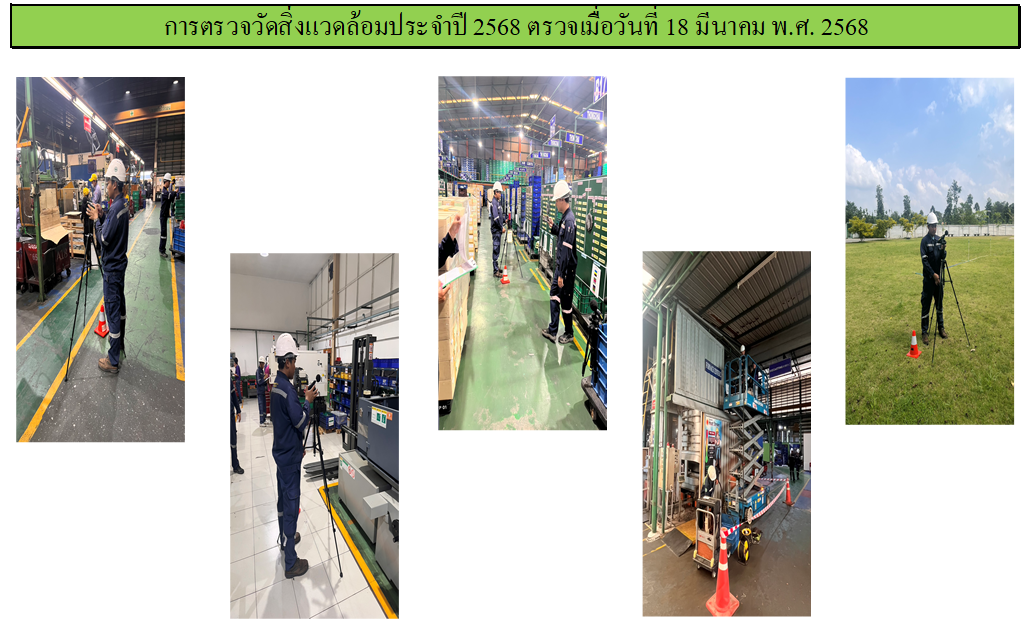
| Environmental management | The company has developed an environmental management plan in accordance with the ISO 14001:2015 environmental management system, having received certification for the ISO 14001:2015 environmental management system on July 15, 2023, and the ISO 45001:2018 occupational health and safety management system on December 1, 2023, from an ISO certification body. This is considered an integral part of the company's internal control system. The monitoring of these systems involves the appointment of a working committee, which must undergo training on standard system requirements and internal audit training to perform the duty of inspecting the operations of various departments. Continuous follow-up meetings are held to review work plans and address issues in case deficiencies are found. Furthermore, the company conducts various environmental inspections, such as noise, light, and heat in the workplace, and air pollution, as well as ensuring efficient management of various hazardous wastes and optimizing resource utilization. 1. Effective management of various hazardous wastes. The company has established a systematic internal management process within the factory, such as the segregation of all types of waste generated from both production processes and other activities within the factory into 3 categories. Type 1. General waste (green bin) refers to waste originating from nature or waste generated from general activities without contamination by hazardous chemicals, such as food scraps, vegetables, fruits, plant debris, animal carcasses, leaves, plastic detergent packaging, candy wrappers, instant noodle packets, plastic bags contaminated with food scraps, etc. Type 2. Recyclable waste (yellow bin) refers to packaging waste or leftover materials that can be reused or recycled, such as glass, paper, plastic, beverage cans, car tires, etc. Type 3. Hazardous waste (red bin) refers to waste contaminated with toxic substances that must be collected as it may cause harm to individuals or the environment, such as fluorescent lamps, flashlight batteries, batteries, aluminum scraps, containers used for chemicals, spray paint cans, etc. 2. Annual Workplace Environmental Monitoring for 2025. The Company conducted its annual workplace environmental monitoring for 2025 on March 18, 2025, through Smile Laboratory Co., Ltd., registration number W-286. The monitoring results indicated no abnormal or excessive values in the company's operational activities. This is attributed to the Company's regular inspection of all work areas and machinery to ensure they are in perfect condition and safe, thereby eliminating risk factors that could lead to accidents or the leakage of various toxic substances.
| ||
| Human rights | Fundamental Principles The Company adheres to and complies with its human rights policy and is committed to conducting business in a sustainable manner, in accordance with the Universal Declaration of Human Rights (UDHR). The Company is confident that it will conduct business with prudence and caution and will not engage in any actions that could lead to direct or indirect violations or impacts on human rights. This includes practicing and promoting respect for the fundamental rights of employees, as well as encouraging respect for the rights of others, which will foster peace within society and happiness in collaboration among employees. This aligns with the Company's human resource management principles. Company Policy Guidelines 1. Respect and comply with laws and human rights principles equally for all individuals. Show mutual respect to all stakeholders with whom the Company is involved. 2. Exercise caution and refrain from committing acts that violate human rights, both directly and indirectly, towards all stakeholders. 3. Identify and assess risks, including human rights impacts, comprehensively and systematically on an ongoing basis across all business activities of the Company and throughout the entire value chain. Establish appropriate guidelines for monitoring, auditing, and management. In the event of unforeseen circumstances, responsibility must be promptly considered. Additionally, implement appropriate and effective remediation processes to mitigate impacts, based on principles of justice and equality. 4. Support and promote human rights among all stakeholders in all forms, encouraging their participation, respect, and adherence to human rights principles. 5. Communicate, disseminate knowledge, and foster understanding among all stakeholders, while also supporting partners and relevant parties to ensure their participation in business operations respects and treats everyone according to human rights principles as per this policy. 6. Monitor and oversee the respect for human rights. Do not neglect or ignore any observed human rights violations related to the Company. Such incidents must be reported to a supervisor or through the designated channels as per the Whistleblowing Policy and Procedure. | https://sanko.listedcompany.com/misc/cg/code-of-ethics-en/index.html | 9 |
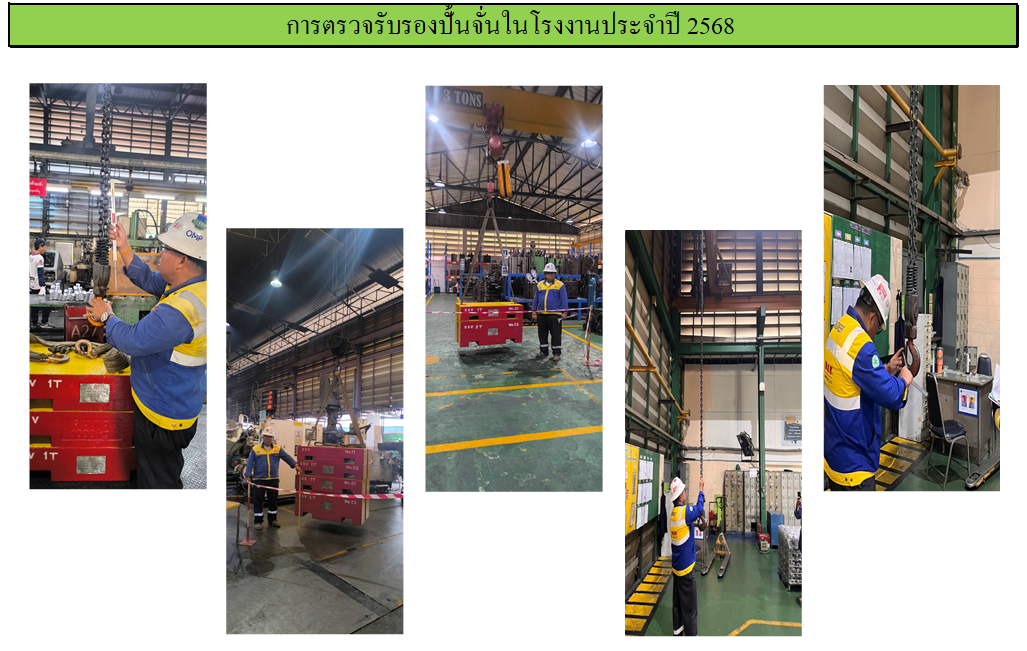
| Occupational health and safety | In 2025, the company continuously developed and improved the efficiency of its safety operations to reduce the risk of illness, injury, or death, and to appropriately care for the quality of life of its employees. The following actions were undertaken: 1. Monitoring, Tracking, and Measurement of Key Occupational Health and Safety Performance as Required by Law with the following topics: 1.1 Legal Testing of Crane Components and Equipment. The company conducted annual testing of crane components and equipment twice in 2025, on January 25, 2025, and July 14, 2025. This was performed by D.S.V. Inspection Co., Ltd., Professional Engineer Registration No. 2189/65. The test results indicated that all cranes remain in perfect working condition, and various lifting accessories are also subject to safety inspections at prescribed intervals.
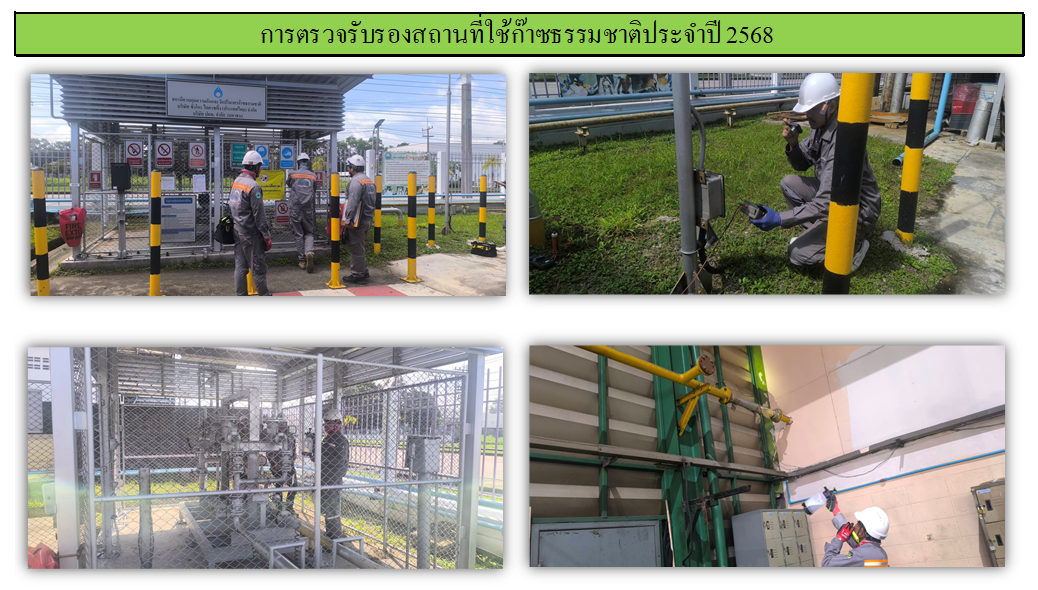
1.2 Annual Testing and Inspection of Natural Gas Facilities for Renewal in 2024. The company conducted the annual certification of natural gas facilities for 2025 on July 25, 2025, by Hybrid Integration Co., Ltd. Registration No. W.Th.Ch.Ch.1-003/2565. The test results for the gas station, pipeline system, and associated equipment indicated that they remain in perfect condition and are safe.
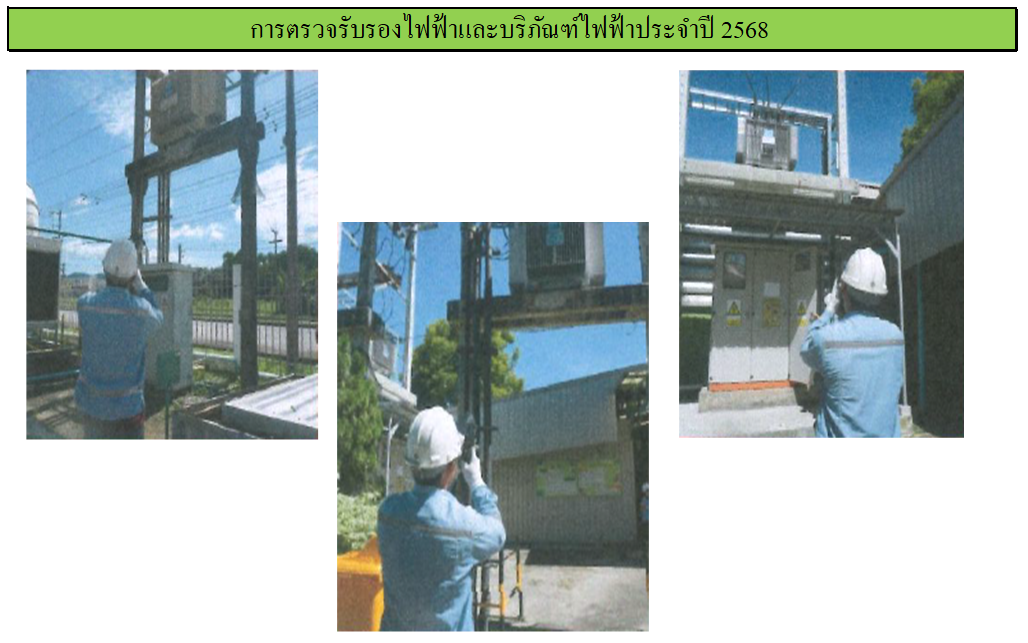
1.3 Annual Electrical System Safety Certification in 2025. The company conducted the annual electrical system safety certification on November 4, 2025, performed by Mr. Kasidit Wijittada, Professional Engineer License No. PFK.1141. The test results for the transformer system, power transmission lines, MDB cabinets, and associated equipment indicated that they remain in perfect condition and are safe.
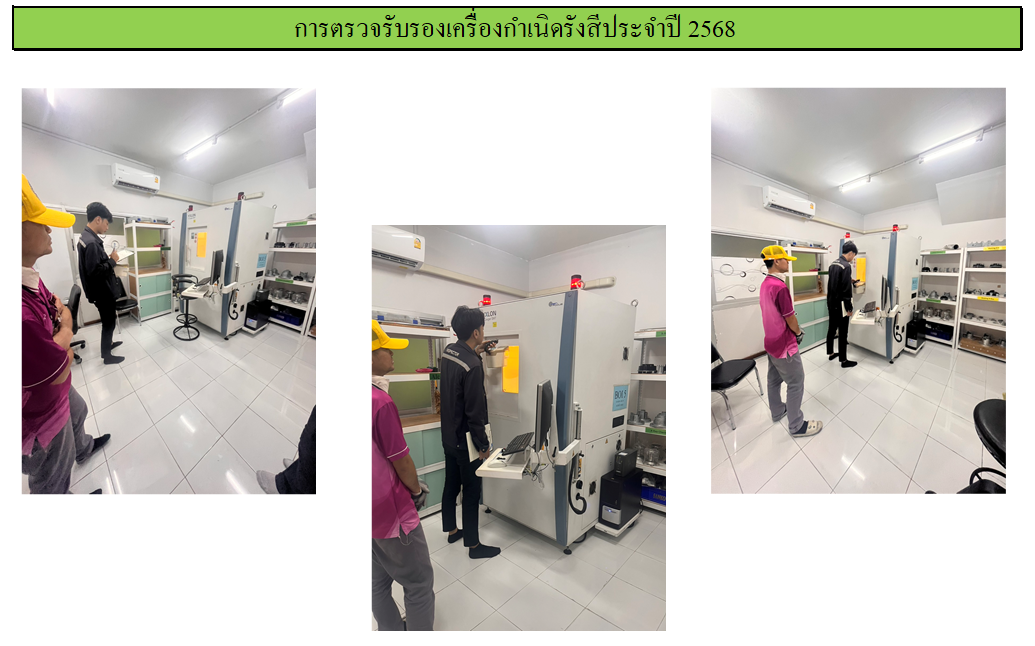
1.4 Annual Safety Assessment of Industrial Radiation Generators in 2025. The company conducted the annual safety assessment of industrial radiation generators in 2025 on October 9, 2025. This was performed by the Thailand Institute of Nuclear Technology (Public Organization). The test results for the X-ray system and associated equipment indicated that they remain in perfect condition and are safe.
2. Safety Training Courses Related to Legal Requirements The organization recognizes the importance of training employees in occupational safety, health, and working environment. This enhances employees' knowledge, enabling them to perform their duties safely, and ensures strict compliance with occupational safety, health, and environmental laws. Furthermore, it reduces the cost of sending employees for external training by allowing qualified employees to serve as internal trainers for their colleagues within the organization.
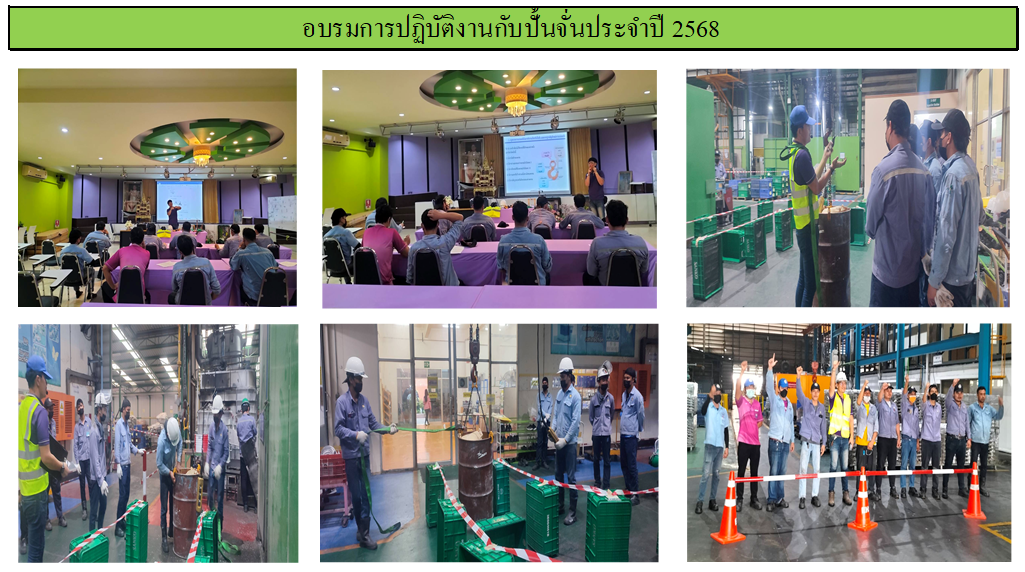
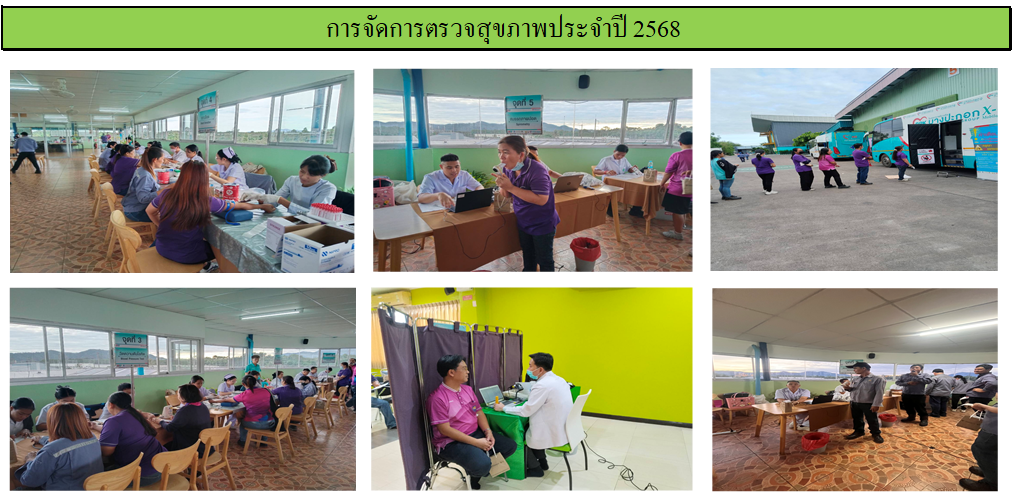
2.3 Safety Officer at Supervisor Level, Safety Officer at Management Level, Safety Unit Service Provider 2.4 Safety Course for General Employees and New Employees according to the Occupational Safety, Health and Environment Act B.E. 2554 (2011) 2.5 First Aid and Basic Life Support Workshop 3. Emergency Preparedness and Response Drills To prepare for potential emergencies within the organization, it is imperative to train employees to acquire knowledge and understanding of working with specific machinery and equipment. This ensures correct, safe, and hazard-free operations, including fire evacuation drills, chemical spills, and gas leaks, among others. This training enables employees to respond correctly to emergency situations, thereby minimizing potential loss of life and property. 3.1 Annual Firefighting and Fire Evacuation Drills in 2025 3.2 Annual Emergency Response Drill for NG Gas Leakage in 2025 3.3 Annual Emergency Response Drill for Furnace Explosion in 2025 4. Annual Health Check-up
|
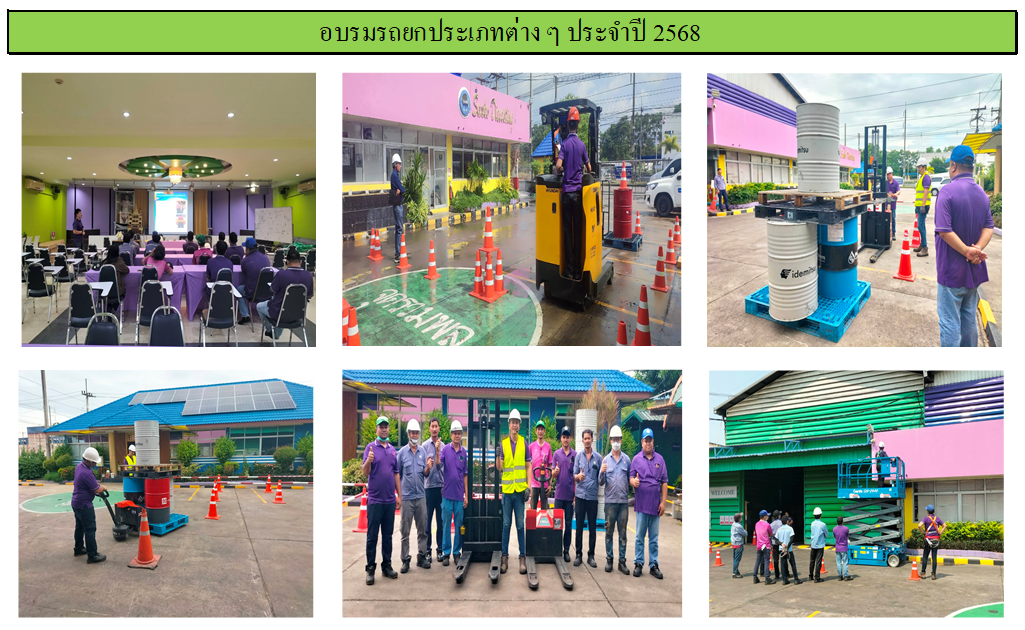 2.2 Annual Training for Crane Operators, Signal Persons for Crane Operators, Material Riggers, Crane Usage Controllers for Overhead Cranes, Gantry Cranes, and other Fixed Cranes, and a review of crane-related work, as legally required, in 2025.
Promoting Compliance with the Code of Conduct
Promotes Compliance by Directors, Executives and Employees
Yes
Description
The Company stipulates that it is the duty and responsibility of all directors, executives, and employees to acknowledge, understand, and strictly adhere to the established business ethics and codes of conduct in their work. Compliance is not voluntary, and ignorance of the established guidelines cannot be claimed. All levels of management within the organization must supervise and consider it a critical matter to ensure that employees under their supervision are aware of, understand, and seriously comply with the established business ethics and employee code of conduct, and also sign to certify full compliance.
Process Document Link
https://sanko-th.listedcompany.com/code_of_conduct.html
Page Number in Report
21
Anti-Corruption Networks & Projects
Joined or Declared Intent to Join Anti-Corruption Networks
Yes
Networks & Projects Joined
| Network / Project | CAC Certified |
|---|---|
| Thai Private Sector Collective Action Against Corruption: CAC | N |
| United Nations Global Compact (UNGC) | |
| Participation of anti-Corruption networks and initiatives |
Material Changes & Developments in CG
Reviewed the CG Policy or Board Charter in the Past Year
Yes
Material Changes or Developments in the Past Year
Yes
Policy Review — Description
The Anti-Corruption Policy and the Collective Action Against Corruption (CAC) handbook were reviewed and revised to serve as practical guidelines for employees, executives, and the Board of Directors in preventing corruption across all organizational processes. The policy content has been updated to enhance clarity and effectiveness, including the clarification of roles and responsibilities of the Board of Directors and executives in overseeing, supporting, and driving anti-corruption efforts within the organization.
In addition, related operational guidelines, internal control measures, and monitoring processes have been improved to ensure alignment with the policy and to strengthen effective implementation. The organization also promotes communication and awareness among personnel at all levels in order to foster a culture of transparency, integrity, and a strong commitment to rejecting all forms of corruption throughout the organization.
The Charter of the Board of Directors has been reviewed and further revised to enhance the completeness, clarity, and comprehensiveness of its content, enabling it to serve more effectively as a practical guideline for the Board’s operations in alignment with good corporate governance principles.
The revisions include clearer definitions of the roles, duties, and responsibilities of the Board of Directors, as well as the scope of authority in overseeing corporate governance, establishing policies, and monitoring the performance of management. These improvements aim to support transparent, accountable, and efficient organizational management.
In addition, the updated charter helps promote a shared understanding among board members in performing their duties and supports well-informed and prudent decision-making, ensuring that the Board’s actions are appropriate and in the best interests of the organization and its stakeholders.
Implements the CG Code for Listed Companies
Yes
CG Code — Description
Sanko Diecasting (Thailand) Public Company Limited has systematically applied the CG Code across its organizational structure, processes, and corporate culture to enhance transparency, credibility, and long-term sustainable growth. The company places great importance on conducting its business with transparency, accountability, and consideration for all stakeholders. It adopts the CG Code as a guiding framework for corporate management to build confidence among shareholders, investors, and society as a whole.
1. Protection of Shareholders’ Rights
The company ensures that shareholders’ fundamental rights are fully respected, including the right to attend shareholders’ meetings, vote, and receive accurate, complete, and timely information.
2. Fair Treatment of Stakeholders
The company values all stakeholder groups, including employees, customers, business partners, creditors, and communities, with clear policies and practices to safeguard their rights and foster strong relationships.
3. Transparency and Disclosure
The company discloses both financial and non-financial information accurately, completely, and in a timely manner, in compliance with regulatory requirements, enabling investors to make informed decisions.
4. Roles and Responsibilities of the Board of Directors
The Board plays a key role in setting policies, vision, and organizational strategies, as well as overseeing management to ensure operations are efficient and aligned with good governance principles.
5. Risk Management and Internal Control
The company establishes appropriate risk management and internal control systems to prevent and mitigate potential risks, with continuous monitoring and evaluation.
6. Ethical Business Conduct
The company promotes integrity and ethical behavior among directors, executives, and employees, adhering to a code of conduct and maintaining a zero-tolerance policy toward corruption.
7. Sustainability and Social Responsibility
The company emphasizes sustainable business practices, taking into account environmental, social, and community impacts, while supporting activities that benefit society.
Other CG Performance & Outcomes
The Company will continuously improve on other matters, in order to increase the efficiency of the corporate governance and increase the standard of the Company to match the CG Code for the listed companies.
In the past year, the Company had been evaluated by the Thai Institute of Directors (Thai IOD) under the inspection project of ‘Corporate Governance Report of Thai Listed Companies 2025: CGR’ with the support of the Stock Exchange of Thailand (SET) and achieved 3 stars (Good) And Shareholders evaluation result for the 2025 Annual Shareholders Meeting score – Excellent (4 medals)